西班牙结束与美F-35谈判,转向欧洲战机选项
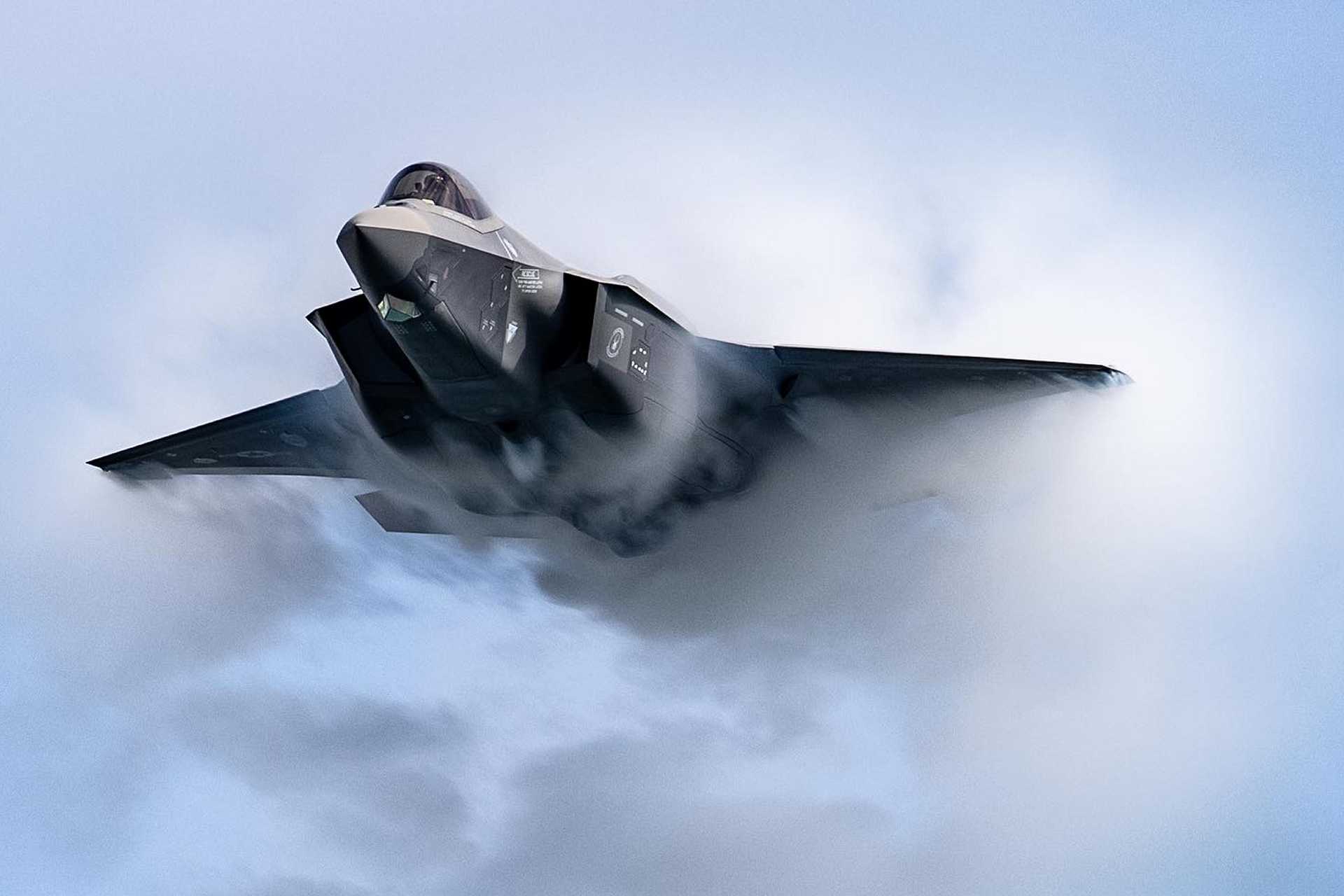
快速阅读: 2025年,西班牙政府决定取消F-35采购计划,转向支持欧洲项目如Eurofighter和FCAS,以减少对外依赖并强化国防自主。此举导致海军失去固定翼舰载机能力,空军则面临长期能力缺口。
Spain’s decision to cancel the F-35 acquisition was driven by a mix of budgetary rules, industrial policy, and strategic concerns. The government’s €10.471 billion defense plan requires that 85% of funds be invested in European programs, making the U.S.-built F-35 incompatible with current spending priorities. Although Spain had allocated €6.25 billion in 2023 for a fighter to replace the AV-8B Harrier and C-15M Hornets, and had submitted a non-binding Request for Information, those steps were suspended. Officials cited restricted access to the F-35’s critical systems, which limits national control and prevents integration of local technologies. The cost of the necessary infrastructure to maintain the aircraft and a unilateral price increase were also cited as negative factors. The government aims to avoid dependence on non-European suppliers and instead support European initiatives like the Eurofighter and FCAS, aligning procurement with industrial participation and strategic autonomy objectives. The decision also aligns with Prime Minister Pedro Sánchez’s resistance to NATO’s 5% GDP defense spending target, limiting the government’s financial flexibility while reinforcing its emphasis on European defense autonomy. The move effectively removes the only currently available fifth-generation aircraft from Spain’s procurement roadmap and forces the Armed Forces to reassess alternative paths for their future air combat capabilities.
Spanish interest in the F-35 program had existed for nearly two decades. In 2008, Lockheed Martin confirmed discussions with Spain regarding a potential future acquisition. In 2014, the Spanish Council of Ministers approved €47.6 million to extend the Harriers’ service life through 2034, postponing their replacement. Despite that, the F-35 continued to be studied as a possible successor. In 2017, both the Air Force and the Navy identified the F-35 as their preferred candidate to replace the aging Hornet and Harrier fleets. A non-binding Request for Information was issued, and by 2019, both branches had entered an early-stage analysis of the aircraft. In 2021, the Ministry of Defense publicly rejected any plans to join the F-35 program, reaffirming Spain’s commitment to the Future Combat Air System (FCAS). However, Lockheed Martin maintained informal dialogue with Spanish authorities, and in 2023, the aircraft reappeared in budget documents and reporting by defense publications such as Janes. By 2025, the decision to definitively cancel the F-35 option was taken following domestic political opposition, limited industrial return, and strategic concerns about dependence on foreign-controlled systems and software.
The implications of this decision vary significantly between the Air and Space Force and the Navy. The most immediate effect concerns the Navy, which plans to retire its AV-8B Harrier II fleet in 2030. The Harrier, currently operated from the LHD Juan Carlos I, has no European replacement with STOVL capabilities. The
F-35B
is the only aircraft in production with those characteristics. Its rejection results in the loss of fixed-wing carrier aviation for the Spanish Navy for at least a decade. With the U.S. Marine Corps and the Italian Navy also retiring their Harriers by 2030, the Spanish Navy will become the last global operator of the type, which raises long-term maintenance and spare parts concerns. Navantia has been tasked with conducting a feasibility study for a new aircraft carrier equipped with catapults and arresting systems. Such a platform would allow the future operation of navalized conventional fighters such as the Rafale M, or eventually, a carrier-capable FCAS variant. The timeline for such a vessel currently extends to at least 2040, which means that between 2030 and the completion of the new carrier, the Navy will lack fixed-wing aviation capability. Only helicopters and, potentially, unmanned systems such as the SIRTAP drone, under evaluation for naval integration, would operate from the Juan Carlos I during that period.
The Air and Space Force is under less immediate pressure but still faces long-term capability gaps. Spain has already replaced its oldest EF-18A/B Hornets with 45 Eurofighter Typhoons under the Halcón I and II programs. The remaining Hornets are scheduled for retirement around 2035, leaving time for further evaluation. General Francisco Braco, Chief of Staff of the Air and Space Force, has ruled out ordering more Eurofighters to avoid overdependence on a single type, citing operational risks if a structural issue were to ground the entire fleet. The F-35A had been seen as a temporary fifth-generation solution until FCAS becomes available. Admiral General Teodoro López Calderón, Chief of the Defense Staff, stated in July 2025 that Spain has no alternative with comparable stealth or sensor fusion technology. Despite acknowledging the importance of such capabilities, he also recognized the long timeline ahead. FCAS is not expected to become operational before 2040 under the most optimistic scenario. Braco also referred to the potential of the French Rafale F-5 as an intermediate option, which would sit between the Eurofighter and the F-35 in terms of capabilities. The Rafale F-5 is still under development and not expected to be available before the late 2020s or early 2030s.
The
Eurofighter Typhoon
remains a key pillar of Spain’s combat aviation, but it has limitations. Spain has a 14% industrial share in the Eurofighter consortium, with final assembly lines in the country and approximately 3,000 direct jobs supported. The aircraft offers high performance in traditional air-to-air and multirole operations. However, its lack of stealth, limited sensor fusion, and absence of short takeoff capability exclude it as a viable substitute for the Navy’s Harriers. The Ministry of Defense has already reduced its order from 87 to 73 units, canceling Tranche 3B. While new upgrades are underway, including enhanced radar and avionics, concerns remain about depending solely on a fourth-generation aircraft for strategic missions. The Typhoon cannot operate from aircraft carriers without significant design modifications, limiting its relevance to future naval operations unless paired with a Catobar-capable vessel and specific adaptation.
The
Rafale
, produced by Dassault Aviation, has apparently emerged as another consideration for both the Navy and the Air and Space Force. The Rafale M, currently operated from the French aircraft carrier Charles de Gaulle, is compatible with Catobar launch and recovery systems. Its potential adoption by Spain would depend on the outcome of the new carrier study. The Rafale’s sensor and electronic warfare suite, including the SPECTRA system, RBE2 AESA radar, and OSF frontal optronics, is fully under French control and continuously upgraded, providing Spain with unrestricted access to hardware and software, a key consideration in light of concerns over the F-35’s U.S.-controlled architecture. The Rafale F-5, planned as a future variant for the French Air Force, has been mentioned as a possible solution for Spain, pending availability. Its multirole design allows transition between air superiority, deep strike, reconnaissance, and nuclear deterrence missions without requiring platform specialization. Although not stealth, the Rafale offers a high degree of survivability and system integration, making it a candidate for long-term partnership if interoperability and delivery schedules align.
Spain remains a committed partner in the FCAS program, alongside France and Germany, with Indra Sistemas representing Spanish industrial interests. FCAS is intended to deliver a sixth-generation fighter with stealth characteristics, advanced AI-driven mission systems, and manned-unmanned teaming capabilities. However, internal disagreements over industrial distribution, particularly France’s recent statements seeking to produce 80% of the aircraft domestically, have generated friction. As of mid-2025, no definitive resolution has been achieved, and production timelines remain uncertain. FCAS is not expected to provide a navalized variant in the initial phases, further limiting its relevance for the Navy in the short term. Nevertheless, the program remains Spain’s long-term strategic goal for replacing its Eurofighters and reinforcing European technological independence. The development of a future conventional aircraft carrier could eventually align with a naval FCAS derivative, but this would require additional funding, coordination, and industrial commitments beyond current planning.
In conclusion, Spain’s definitive suspension of the
F-35
program reflects both domestic political priorities and long-term industrial strategy. The Navy will lose its fixed-wing carrier aviation capability by 2030 with no immediate substitute. The Air Force maintains operational continuity with Eurofighters until 2035, but no fifth-generation aircraft will be available to replace the F-18s before FCAS is ready. The Eurofighter and Rafale offer partial solutions, but neither meets all operational requirements. The FCAS program remains the cornerstone of Spain’s future air combat doctrine, though its uncertain timeline and unresolved internal disputes complicate planning. Spain’s current choices imply a reduced technological capability in the short term but aim to preserve European defense sovereignty and industrial participation over the next decades.
(以上内容均由Ai生成)


