西班牙向印度交付C295运输机,提升空运能力
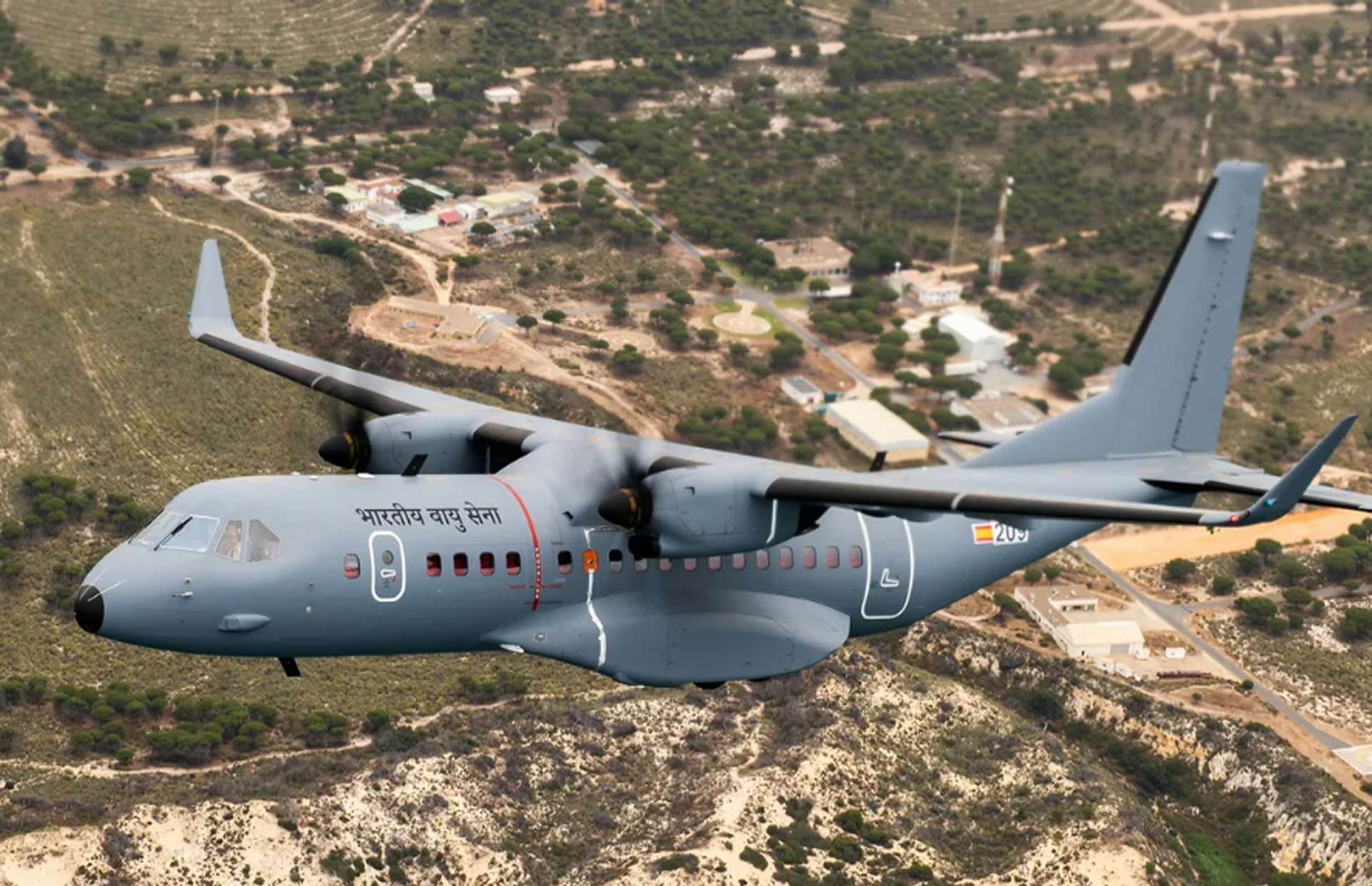
快速阅读: The remaining 40
Airbus C295
will be produced in India by Tata Advanced Systems Limited (TASL) in collaboration with Airbus under a full industrial partnership, making it the first time a military aircraft is being manufactured entirely in the Indian private sector. A new assembly line is being constructed in Vadodara, Gujarat, and is expected to be fully operational by the end of 2025. As part of the deal, Airbus has committed to a full transfer of technology and production knowledge, which includes the domestic manufacturing of over 14,000 parts and subassemblies, the development of skilled labor, and the establishment of a robust supply chain across Indian aerospace hubs in Hyderabad, Bengaluru, and Nagpur. This program represents a strategic milestone under the Indian government’s ‘Make in India’ and ‘Atmanirbhar Bharat’ (self-reliant India) initiatives and is expected to generate over 15,000 direct and indirect jobs in the defense sector.
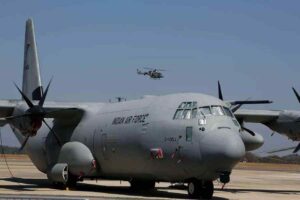
Technically, the Airbus C295 is one of the most capable medium tactical airlifters currently in production. It is powered by two Pratt & Whitney PW127G turboprop engines, giving it excellent performance at high altitudes and in hot weather conditions, key requirements for operations in India’s northern and northeastern frontiers. The aircraft can carry a maximum payload of 9,250 kg, including troops, vehicles, and cargo pallets, and has a rear-loading ramp for rapid embarkation and deployment. It can accommodate up to 71 fully equipped troops or 50 paratroopers and supports air-to-air and static line airdrop operations. The C295’s operational range exceeds 2,300 km with full payload, and it can cruise at speeds up to 480 km/h. One of its most critical advantages is its ability to take off and land on short, soft, and semi-prepared airstrips as short as 670 meters, enabling it to operate in austere environments and remote forward areas with limited infrastructure. Additionally, it can be reconfigured for a wide variety of roles, including medical evacuation, signals intelligence, electronic warfare, search and rescue (SAR), and maritime patrol, making it a multi-mission force multiplier for the Indian Air Force.
The Airbus C295 represents a substantial technological advancement over the aging HS748 Avro aircraft it is replacing in the Indian Air Force inventory. Originally designed in the 1950s by British firm Avro, the HS748 is a twin-turboprop transport aircraft with a maximum payload capacity of approximately 5,800 kg and limited capability for short takeoff and landing (STOL) operations. It lacks a rear loading ramp and cannot accommodate modern palletized cargo or perform tactical airdrop missions efficiently. In contrast, the C295 features a more powerful propulsion system with Pratt & Whitney PW127G engines, a higher payload capacity of 9,250 kg, and advanced avionics including a digital glass cockpit and mission systems compatible with night operations and electronic warfare suites. Its STOL capability, reinforced landing gear, and rear cargo ramp allow for rapid loading and operations from unprepared airstrips, giving it superior operational flexibility. Furthermore, the C295 can be quickly reconfigured for multiple roles including MEDEVAC, paratroop deployment, and intelligence missions, making it a modern, multi-role tactical platform far more suitable for contemporary combat and humanitarian scenarios than the legacy HS748.
The strategic and geopolitical context surrounding the
C295
’s induction is particularly significant. India continues to face a complex and evolving security environment characterized by heightened tensions with both Pakistan and China. Along the western border, although a ceasefire agreement with Pakistan has been in place since 2021, recent weeks have witnessed a sharp escalation in hostilities. A significant cross-border confrontation resulted in human casualties and material damage on both sides, underscoring the fragile nature of the ceasefire and the continued threat posed by infiltration attempts and militant activity. These developments remain a major concern for India’s Northern Command, which must maintain a high level of readiness along the Line of Control. Meanwhile, the prolonged military standoff with China along the Line of Actual Control (LAC) in eastern Ladakh continues, with both countries maintaining forward deployments and investing heavily in infrastructure and logistics along the contested frontier. China’s rapid military modernization, increasing airpower deployments in Tibet, and strategic alignment with Pakistan pose a dual-front challenge to India’s territorial integrity and operational preparedness.
In this high-stakes security environment, the C295 significantly enhances India’s ability to conduct rapid force projection, forward logistics support, and quick-reaction deployments across sensitive border regions. Its ability to reach forward airstrips near the LAC, such as Daulat Beg Oldi, Nyoma, and Advanced Landing Grounds in Arunachal Pradesh, is a game-changer for high-altitude operations. From an operational standpoint, the C295 fills the capability gap between the smaller Dornier Do 228 and the heavier C-130J Super Hercules, enabling tiered air mobility for a range of tactical and humanitarian missions. It also improves inter-theater mobility, supports airborne operations, and enhances India’s capability to respond to internal security threats, natural disasters, and regional contingencies in the Indian Ocean Region (IOR).
Beyond its tactical value, the program plays a critical role in positioning India as a future exporter of defense aerospace systems. The successful industrialization of the C295 in India could become a model for other countries seeking affordable, reliable, and locally supported tactical airlift solutions. With countries in Southeast Asia, Africa, and Latin America expressing interest in the C295 platform, India could emerge as a regional manufacturing hub, supported by Airbus and aligned with global supply chains. This aligns with India’s broader defense diplomacy and export strategy, allowing the country to project soft power while simultaneously achieving defense self-sufficiency.
The induction of the
C295
also reflects India’s maturing defense procurement strategy, which now emphasizes long-term capability development, domestic manufacturing, and strategic partnerships over purely off-the-shelf purchases. As more aircraft roll off the Vadodara assembly line in the coming years, India will not only reinforce its own national security architecture but will also take a decisive step toward becoming a key player in the global defense industrial ecosystem.
The remaining 40
Airbus C295
will be produced in India by Tata Advanced Systems Limited (TASL) in collaboration with Airbus under a full industrial partnership, making it the first time a military aircraft is being manufactured entirely in the Indian private sector. A new assembly line is being constructed in Vadodara, Gujarat, and is expected to be fully operational by the end of 2025. As part of the deal, Airbus has committed to a full transfer of technology and production knowledge, which includes the domestic manufacturing of over 14,000 parts and subassemblies, the development of skilled labor, and the establishment of a robust supply chain across Indian aerospace hubs in Hyderabad, Bengaluru, and Nagpur. This program represents a strategic milestone under the Indian government’s ‘Make in India’ and ‘Atmanirbhar Bharat’ (self-reliant India) initiatives and is expected to generate over 15,000 direct and indirect jobs in the defense sector.
Technically, the Airbus C295 is one of the most capable medium tactical airlifters currently in production. It is powered by two Pratt & Whitney PW127G turboprop engines, giving it excellent performance at high altitudes and in hot weather conditions, key requirements for operations in India’s northern and northeastern frontiers. The aircraft can carry a maximum payload of 9,250 kg, including troops, vehicles, and cargo pallets, and has a rear-loading ramp for rapid embarkation and deployment. It can accommodate up to 71 fully equipped troops or 50 paratroopers and supports air-to-air and static line airdrop operations. The C295’s operational range exceeds 2,300 km with full payload, and it can cruise at speeds up to 480 km/h. One of its most critical advantages is its ability to take off and land on short, soft, and semi-prepared airstrips as short as 670 meters, enabling it to operate in austere environments and remote forward areas with limited infrastructure. Additionally, it can be reconfigured for a wide variety of roles, including medical evacuation, signals intelligence, electronic warfare, search and rescue (SAR), and maritime patrol, making it a multi-mission force multiplier for the Indian Air Force.
The Airbus C295 represents a substantial technological advancement over the aging HS748 Avro aircraft it is replacing in the Indian Air Force inventory. Originally designed in the 1950s by British firm Avro, the HS748 is a twin-turboprop transport aircraft with a maximum payload capacity of approximately 5,800 kg and limited capability for short takeoff and landing (STOL) operations. It lacks a rear loading ramp and cannot accommodate modern palletized cargo or perform tactical airdrop missions efficiently. In contrast, the C295 features a more powerful propulsion system with Pratt & Whitney PW127G engines, a higher payload capacity of 9,250 kg, and advanced avionics including a digital glass cockpit and mission systems compatible with night operations and electronic warfare suites. Its STOL capability, reinforced landing gear, and rear cargo ramp allow for rapid loading and operations from unprepared airstrips, giving it superior operational flexibility. Furthermore, the C295 can be quickly reconfigured for multiple roles including MEDEVAC, paratroop deployment, and intelligence missions, making it a modern, multi-role tactical platform far more suitable for contemporary combat and humanitarian scenarios than the legacy HS748.
The strategic and geopolitical context surrounding the
C295
’s induction is particularly significant. India continues to face a complex and evolving security environment characterized by heightened tensions with both Pakistan and China. Along the western border, although a ceasefire agreement with Pakistan has been in place since 2021, recent weeks have witnessed a sharp escalation in hostilities. A significant cross-border confrontation resulted in human casualties and material damage on both sides, underscoring the fragile nature of the ceasefire and the continued threat posed by infiltration attempts and militant activity. These developments remain a major concern for India’s Northern Command, which must maintain a high level of readiness along the Line of Control. Meanwhile, the prolonged military standoff with China along the Line of Actual Control (LAC) in eastern Ladakh continues, with both countries maintaining forward deployments and investing heavily in infrastructure and logistics along the contested frontier. China’s rapid military modernization, increasing airpower deployments in Tibet, and strategic alignment with Pakistan pose a dual-front challenge to India’s territorial integrity and operational preparedness.
In this high-stakes security environment, the C295 significantly enhances India’s ability to conduct rapid force projection, forward logistics support, and quick-reaction deployments across sensitive border regions. Its ability to reach forward airstrips near the LAC, such as Daulat Beg Oldi, Nyoma, and Advanced Landing Grounds in Arunachal Pradesh, is a game-changer for high-altitude operations. From an operational standpoint, the C295 fills the capability gap between the smaller Dornier Do 228 and the heavier C-130J Super Hercules, enabling tiered air mobility for a range of tactical and humanitarian missions. It also improves inter-theater mobility, supports airborne operations, and enhances India’s capability to respond to internal security threats, natural disasters, and regional contingencies in the Indian Ocean Region (IOR).
Beyond its tactical value, the program plays a critical role in positioning India as a future exporter of defense aerospace systems. The successful industrialization of the C295 in India could become a model for other countries seeking affordable, reliable, and locally supported tactical airlift solutions. With countries in Southeast Asia, Africa, and Latin America expressing interest in the C295 platform, India could emerge as a regional manufacturing hub, supported by Airbus and aligned with global supply chains. This aligns with India’s broader defense diplomacy and export strategy, allowing the country to project soft power while simultaneously achieving defense self-sufficiency.
The induction of the
C295
also reflects India’s maturing defense procurement strategy, which now emphasizes long-term capability development, domestic manufacturing, and strategic partnerships over purely off-the-shelf purchases. As more aircraft roll off the Vadodara assembly line in the coming years, India will not only reinforce its own national security architecture but will also take a decisive step toward becoming a key player in the global defense industrial ecosystem.
(以上内容均由Ai生成)